
Renovation punch lists and condition surveys
On a refurbishment, what mattered before the work started matters most. Record the original condition, run snags on the plan and confirm every stage with a photo.
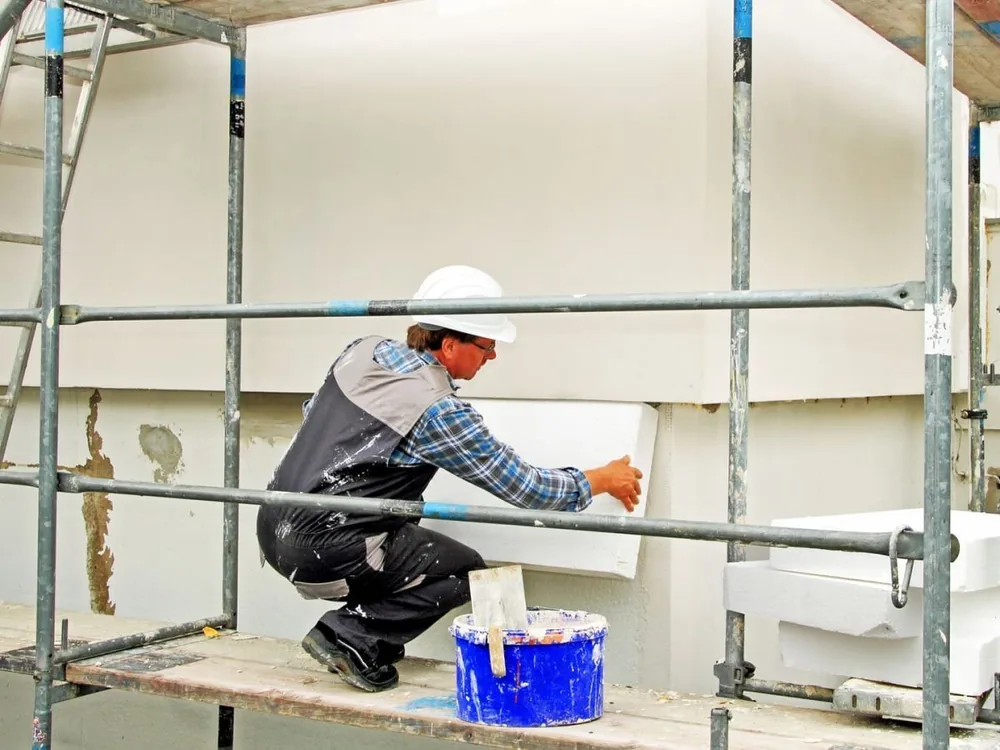
Where it works
Wherever work happens inside an existing building rather than on an empty plot.
- 01Major repairs of residential buildings
- 02Refurbishment of public buildings
- 03Converting buildings to a new use
- 04Building services replacement
- 05Façade and roofing works
What matters on a refurbishment
Concealed works and the original condition are the two main sources of disputes.
Recording the “before” state
The original condition of the structure is documented before work starts.
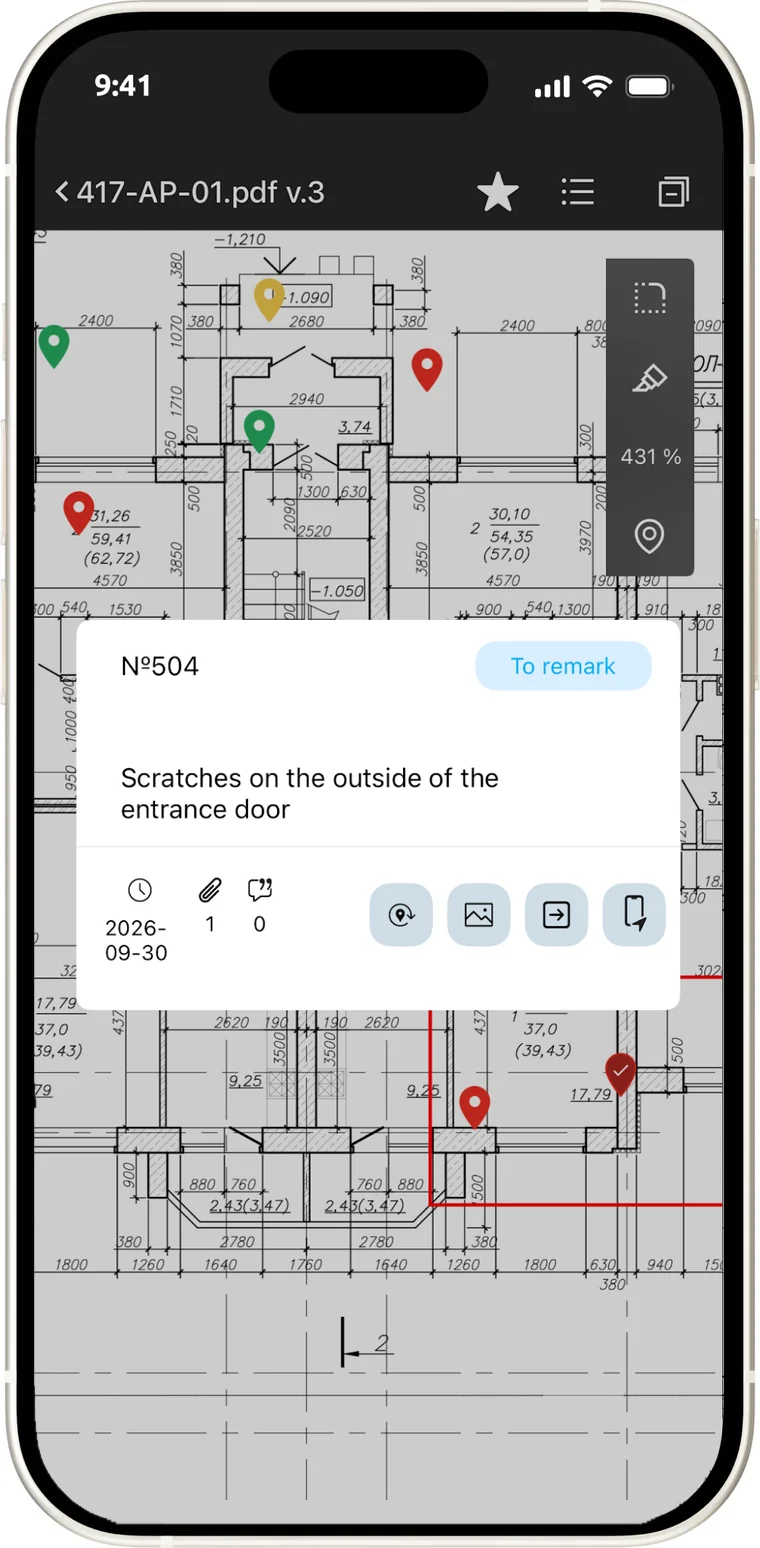
Snags on the building plan
A defect is tied to a specific room and level.
Concealed works
Stages that will not be visible later are recorded with photographs.
Stage-by-stage acceptance
Each stage is closed on its own instead of everything at the end.
Schedule by work zones
Work in an occupied building runs by zones and by programme.
Reports for the owner
The document on completed work is produced from the system.
Who is involved
On refurbishment the client is usually closer to the process than on new build.
- 01
Supervision
Controls quality and concealed works.
- 02
Contractor
Runs the work by stages and confirms completion.
- 03
Owner or operator
Sees progress and the condition of the building.
- 04
Designer
Tracks deviations from the design decisions.
What changes
The argument “it was like that before you arrived” is settled by a record, not by recollection.
- The original condition is documented before work starts
- Concealed works are backed by photographs
- Stages are accepted without questions piling up at the end
- Residents and the owner see a clear picture
- Warranty cases are resolved from the site history
We will show how to run a refurbishment with every stage recorded